because life–its joys, challenges, beauties, absurdities–still goes on
Search Icon
Author: Sandee McGlaun
I teach writing and direct the writing center at a small liberal arts college in southwest Virginia, where I live with my new husband Steve, and 3 bossy cats.
According to my radiation oncologist, my radiation dose consists of 6 million photons.
I think this is a daily dose (as opposed to an overall total), and in fact, since I receive treatments from three angles, I may be receiving 3 x 6 million photons each day.
Guess clarifying that’ll be one more of those one-last-questions I’ll need to ask at my final consult with him. 🙂
Danger, High Radiation: I just might be glowing in anticipation of my treatments nearing an end.
And, yes, those ARE little lightning bolts all over my shirt.
No, I don’t receive my radiation treatments standing out under a tree (how much more pleasant a prospect…), or while listening to pop music from 1990.
I do, however, assume this position for treatment each weekday: arms stretched above my head, the left cocked at a lower, tighter angle due to ongoing mobility issues, my head lifted and turned to the right both to watch the breathing monitor that governs my dosages and to expose the lymph node basin just above my clavicle, all the better to zap it.
Standing up in the position, as I am here, I look like I’m vogue-ing, a la Madonna.
Lying on the table beneath the machine, I feel more like I’m a TV crime show victim awaiting a chalk outline.
It can feel a little grim there on the table, centered in the red line cross-hairs of the laser positioning beams, listening to the whines and whirs of my radiation being delivered.
So, all of my doctors know this view: me, holding a journal, my mouth open, asking the latest in a string of just-one-more questions.
They may sometimes wonder if there’s anything in my journal -except- questions. But each of my practitioners, including my radiation oncologist Dr. Buck, has answered each query patiently and thoroughly.
We’ll have one more consultation next week. And I’ll probably have a few last questions. 🙂
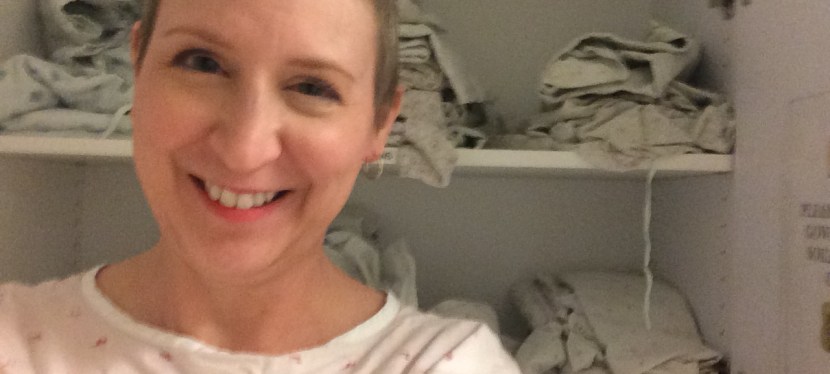
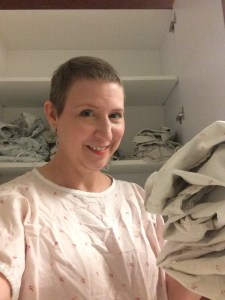
So here’s what’s kind of funny about these gowns: in the closet where I have to fetch one each day, they are labeled “capes.” Does that make all us irradiated folk each some kind of superhero?
Even if they do make us wear them backwards?
Considering the fact that more than one superhero has gotten their powers in weird laboratory snafus that involve things like (accidental) radiation, well…
I’m gonna put on this cape and fly right on outta here!
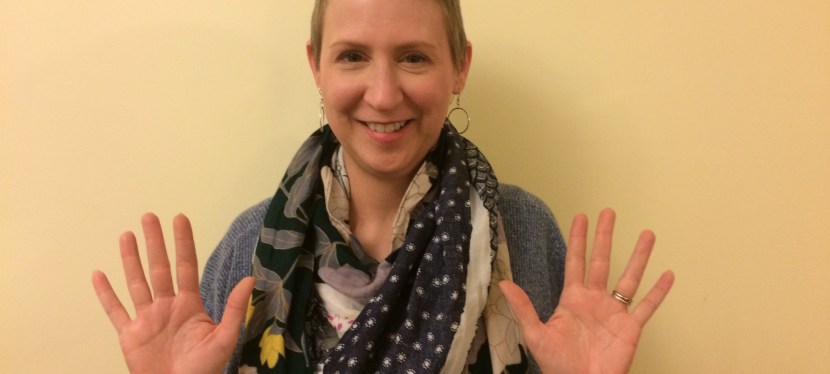
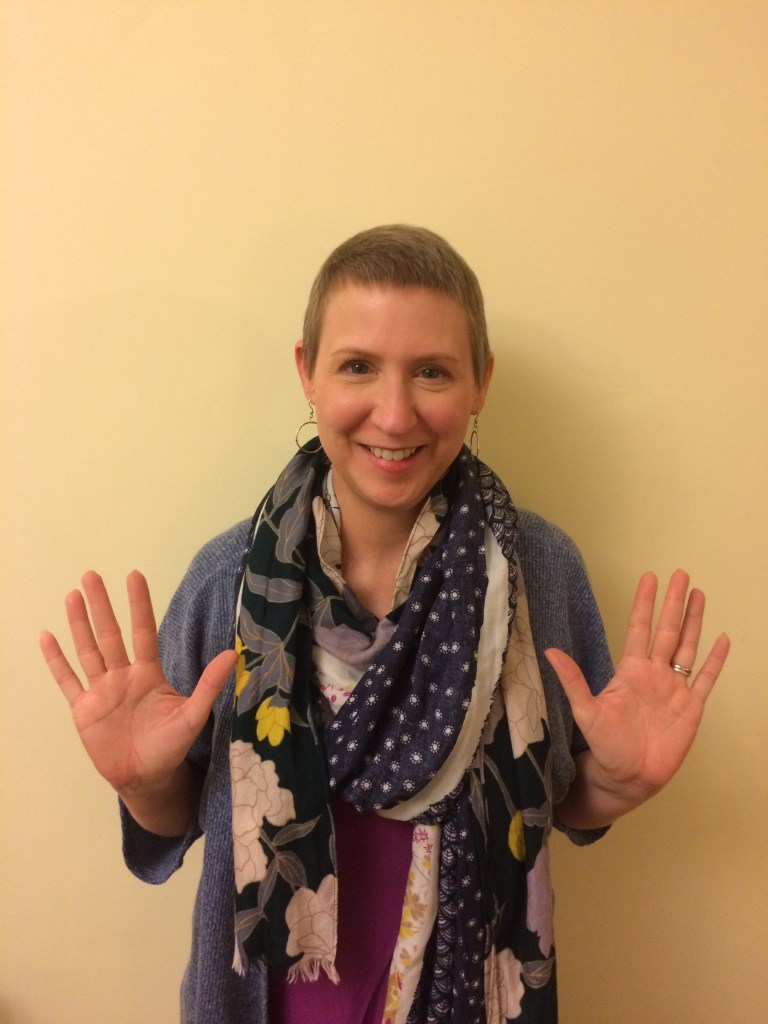
Things have been a little crazy lately, between daily radiation, a brief work trip, and a non-blog writing project with a fast-approaching deadline. I am glad to report that, including today, I am down to my last 10 radiation treatments! Inspired by a friend’s comment on Facebook, I thought I’d do something a little different this week, and post a pic each day to mark the countdown. Though I will still have quite a ways to go with reconstruction and full recovery, concluding radiation feels like a significant milestone, as it marks the close of my cancer treatment. After so many months, that feels pretty major.
I’ll soon be back to regular posts (I have a backlog of stories to share, including a more in-depth reflection on radiation, and more books and hats. Always more hats.)
to my husband, who has risen above and beyond again and again;
to my parents, who’ve made multiple visits from Georgia to offer their love and encouragement;
to my sister-in-law and fellow survivor Lisa, who came from Nevada to support me before and after surgery;
to my brother Todd, who shaved his head and told me about Essiac tea, and offered to visit;
to my nephew Ethan, who shaved his head and donated his hair to Locks of Love;
to my stepsons Dusty, who had special pillows made for post-surgery comfort, and Tucker, who has made me laugh (and groan) with many puns;
to all the doctors, surgeons, nurses, and technicians who’ve been tasked with my care and cared for me so well (and answered, answered, answered my endless questions);
to Shannon and everyone who fed us though the Meal Train during chemo;
to Brandy, for the pixie cut to soften the blow of losing my hair;
to my Girls, for shaving my head, for taking me wig-shopping, for taking me to the movies–for always being there, in so many ways;
to my dear ones near and far who sent cards and chocolates and flowers and books and bath salts and bears and so many generous gifts I can’t begin to name them all;
to the friends who “Sandee-sat” when I felt too icky to move, and to those who got me out of the house when I really needed to;
to Sarah, for gentle, restorative yoga and poetry that saw me through some tough days;
to Rita, Mindy, and Pat, whose healing touch has healed me at various points along this path;
to fellow survivor M., whose kind messages and advice have been a bedrock of hope;
to all my many cheerleaders who sent encouraging words via text and Facebook and Messenger;
to all the readers of my blog, who liked and commented and cheered me on;
to the folks who ordered “Be The Tea” shirts for a good cause;
to the Writing Center tutors, for their kind and caring notes (and Jenny, for making it all happen while I’m away);
to my colleagues at RC, for helping me take the time to heal;
to the good people at First Presbyterian, the church of my childhood, who have offered up many prayers;
to all the ladies in my support group, especially our Fearless Leader Catherine;
to Sandra, Mike, and Jolina, for making my pre-surgery photo-shoot beautiful;
to the gentlemen valets who’ve always parked my car with a smile at Blue Ridge Cancer Care;
to the TSA agent at the Atlanta airport who said, “This will not be the end of you, you know that, right?”
and to all those courageous souls who advocate for human and civil rights for all people, including the right to decent health care, because without it, I might not be writing this note–
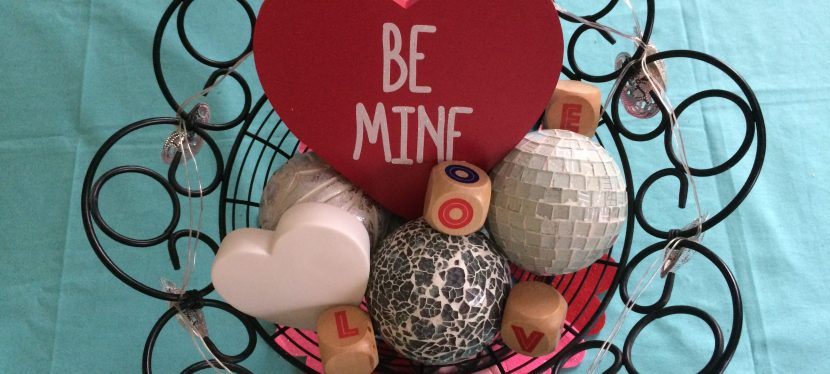
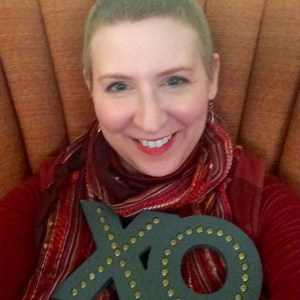
You are all my Valentines.
With thanks and love, wishing you a beautiful day.
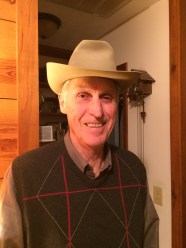
My father taught for well over forty years in the public school system; he started with a few years of high school in Texas, and then, for the bulk of his career, taught chemistry at a community college in Georgia. He’s retired now, and tomorrow is his birthday. In honor of the contributions he and all other smart, dedicated, and hard-working teachers have made to the education and growth of our young people, I’m featuring his vintage gray Stetson in today’s Heads Up! post.
The hat itself testifies to the kind of opportunity and success access to public education offers. My dad, Garry, grew up on a farm in rural Texas, and he was the first in his family to go to college. When he graduated in 1964 from what was then East Texas State University, his parents gifted him the Stetson as a graduation gift.
It fits!
According to the receipt, still tucked in the box, the hat cost $12, the equivalent of around $94 today. After graduating, he put his degree right back to work in the service of educating others.
I remember him wearing the Stetson on occasion during my childhood. When I was in middle school, we discovered that it fit me, too. Both my father and I have (at least judging by the general inventory of the hat industry) unusually small heads. So it was a kick to discover that I could sport his Stetson.
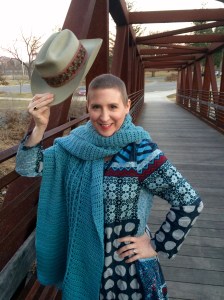
Having grown up in the Southeast, I never had my parents’ bent for Western style (though I am partial to boots of all kinds). To give the Stetson a little feminine flair I added a (removable) floral band and paired it with a cozy blue wrap over a mixed calico-print dress and jeans.
According to the official Stetson website, the company was founded in 1865 by John Batterson Stetson, who, after traveling out west as a young man, returned east to open a hat-making shop in Philadelphia. His father had also been in the trade, and passed his skills on to his son. With an initial investment of somewhere between $60 and $100 (accounts vary), Stetson finally struck a chord with his “Boss of the Plains” design in 1869 and in 1870 purchased property for his own factory. After his death in 1901 and well into the 1950s, the company designed and manufactured a wide variety of styles, including hats for the military during the war.
When hats began to drift out of daily fashion in the 1960s, it was President Lyndon B. Johnson’s influence that encouraged the company’s turn toward Western styles. That proved a long-term lucrative market. Manufacturing moved to Missouri, and movies like Raiders of the Lost Ark helped keep the hats popular. The current Stetson factory is in Garland, Texas.
Changing up the band of my Dad’s hat to a narrow one in black, rust, and gold makes the Stetson the perfect accessory for a black poncho, jeans, and equestrian-style boots.
So here’s a hats off to all our educators, especially those like my Dad who’ve dedicated their entire careers to public education. Thank you for your service. We are indebted to you and will continue to need your wisdom, guidance, and strength.
And happy birthday, Dad! Thank you for the loan of your wonderful hat.
———————————–
Heads up!
∼ Beautiful, quirky hats make me happy. The “Heads Up!” series is a reminder to keep my (still bald-ish) head up, to pay attention to the good in the world, and to encourage myself and others facing a tough road that it’s possible to find the fun in even the most challenging circumstances. ∼
My regular readers (what a gift, to think I have some regular readers!) might have noticed that I have only been posting once a week of late, instead of twice. I seem to be experiencing a bit of writer’s block, not in the sense that I don’t have plenty of material (in Cancerland, there is never a shortage of material), but in the sense that I can’t seem to get myself to sit down and focus long enough to do the work.
I think it’s because I’m angry.
eClosure.com
Anger is, of course, one of the five stages of grief (cf: denial, anger, bargaining, depression, acceptance). While I’ve certainly been grieving (my identity as a “healthy, active” person, my breasts, my mobility, my peace of mind), I don’t think I’ve spent seven months stuck in denial. Which makes me think those stages are rather like descriptions of the writing process (cf: planning, drafting, revising, editing, publishing)–neither grief nor writing ever follows a nice, neat linear narrative, even though we talk about both as if they did.
One of my friends recently noted that she liked the anger stage of grief because it was at least galvanizing for her. I feel, at present, more paralyzed. Overwhelmed. I’m angry that all the treatments make me feel worse than the disease ever has. I’m angry that I’m over half a year in, and I still have at least half a year to go. I’m angry that while I’m presumably cured, just in case I’m not really cured (sneaky little bastards, those cancer cells), I have to have 2 x-rays and 6 million photons of radiation shot into my body five days a week for five weeks. I’m angry that not one of seemingly hundreds of studies on creams, lotions, and gels have resulted in any definitive conclusions about what really does and doesn’t protect your skin from radiation, making the risk of long-term damage (for me=potential issues with reconstruction) ultimately an individual genetic crapshoot.
And then I feel guilty.
Because while it sucks to have cancer, I am getting excellent medical care. The chemo worked! I am healing! I can afford to hit my cancer yet one more time with radiation because I have the gifts of time and good insurance–not everyone does. My surgeons, doctors, nurses, and technicians are skilled, smart, supportive. My husband is amazing, and friends and family and even strangers encourage me everyday.
So I get that I’m lucky, and I’m profoundly grateful.
But I’m still angry.
Internet blues
Having been forcefully reminded just how precious and precarious is this life, I’m angry with how badly people treat one another these days. And I don’t just mean in comment threads on social media, though the vitriol online makes me shiver. From our highest government leaders to our neighbors down the street, it seems like we’ve abandoned empathy and simple acts of kindness almost everywhere. One recent example: Roanoke has a number of rather short C-shaped on/off ramps connected to the freeway that runs through town. Yesterday, driving between appointments, I moved over into the left lane at one such ramp to let two cars merge. I needed to gain access back into the right lane almost immediately, as my exit was coming up, so I put on my blinker, thinking the silver VW Bug I’d moved over for would likely return the favor. Instead, the driver accelerated to where he was just close enough that I couldn’t move over safely–and then stayed there, keeping pace, even after I tried accelerating myself to pull ahead of him. I had to brake and go around him from behind at the last second, or miss my exit. He smiled smugly as he passed me on the right.
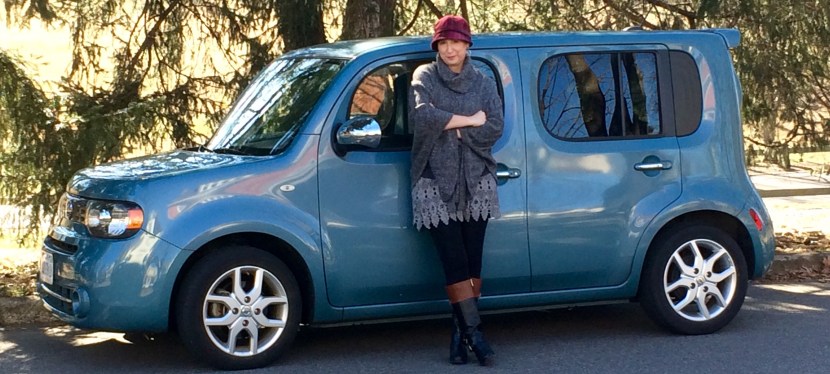
Did the young man have something against middle-aged women? My plaid fuchsia hat? My “animal friendly” license plate? Was he just pissed because my blue Cube is way cuter than his Bug? Seriously: why the deliberate act of meanness?
Uh oh: make this girl mad and she’ll…make nice?
It’s possible (though I think unlikely) he was simply oblivious, but even so: in this age of near-permament distraction, if we start using distractedness as a justifiable excuse for unkindness, we’re in deep, deep trouble.
Blowing my horn and flipping him off (oh, yes, she did) didn’t make me feel much better. There’s something else that I think will. But I need your help.
Now, I don’t know about you, but lately I’ve seen so many negative news reports alone that if I were to try to counter them five to one, I’d never be able to keep up. But how about two to one?
This is my Do Good to Feel Good challenge to you: counter negatives you experience (or create) with double the positives. Embrace the 2:1 Kindness Ratio.
The 2:1 Kindness Ratio
If someone is a jerk to you in traffic, do two good deeds toward other drivers to offset it.
If someone insults you, pay two compliments or offer kind words to two people, as a kindness-counter-gesture.
Cute kitty!
If you read and share articles about scary and frustrating things happening in our government and world via social media (and I think we must, to stay aware and informed, even, or especially, when truths are hard; we must also vet all sources, and resist fake news!), then also make an effort to read and share a few stories of good news, too. (If nothing else, there’s always cute cat photos.)
Of course, the best way to curtail unkindness is to make sure you yourself aren’t initiating it. So be civil. Period. Pay attention to those around you, and practice choosing empathy first. Would the young man in the Bug have been nicer if he’d known I was heading to radiation treatment for cancer? I don’t know–but none of us should need a reason to be nice. Your mama, like mine, no doubt taught you that things like rudeness, name-calling, and stereotyping are ugly, and she was right. So stop it. And if you goof up, pick your two positive actions and make them happen.
Perhaps anger really does galvanize one to action. But anger is exhausting. So let’s all try to dig ourselves out of this karmic hole we’re in. Two to one in favor of kindness: is that a bargain, or what?
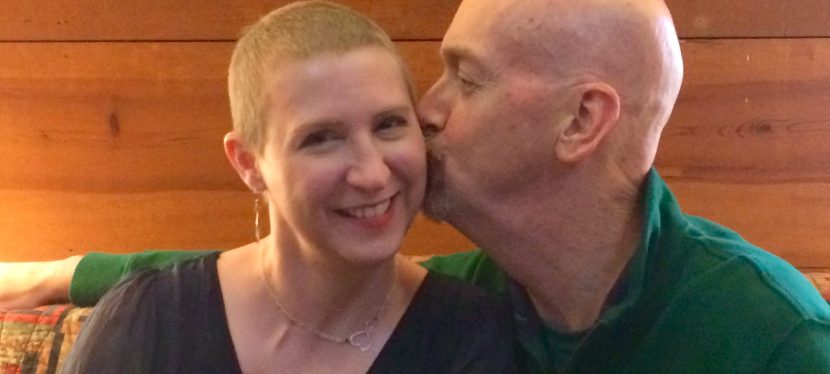
On October 31st, 2016, then-President Barack Obama made a Presidential Proclamation declaring November “National Family Caregivers Month,” honoring “those who give of themselves to be there for their family, friends, and neighbors in challenging times.” At the time, I missed the announcement, still in a pretty pronounced post-chemo fog of pain and fatigue. And I was especially distracted that week: on November 1st, I was scheduled for a post-chemo mammogram and ultrasound, followed by an appointment with my oncologic surgeon to review the results of the scans, which would tell us whether or not chemo had been effective. November 1st was also hubby Steve’s birthday. When we’d met with the oncologic surgeon pre-chemo to talk scans, the news had been tough, so we’d held off scheduling any birthday festivities for the evening, just in case.
Though anxious, we were hopeful, and thankfully, the news was good. Still, I felt guilty, filling Steve’s birthday with yet another set of medical appointments. He’d been right by my side for most every single doctor’s visit or test since June, whether surgical consultation or CT scan or hours-long chemotherapy treatment. Going to the doctor isn’t much fun even when it’s your own body you’re trying to heal, and a sterile medical office with outdated magazines definitely does not scream “birthday party.”
My Sweetie Pi
In his proclamation, the former President lauded the “incredible generosity” of family caregivers, a description that itself seems almost not generous enough for the reality of spouses and partners of women with breast cancer. Along with accompanying me to appointments, Steve has driven me to offices and errands near and far, waited patiently, lent a second ear, helped me manage the information overload. He’s taken on the bulk of the household chores. He’s held me when I needed to cry; he makes jokes so I don’t forget to laugh. He’s encouraged me to take naps and go on walks, and he’s fetched my prescriptions and the occasional Coca-Cola Icee whenever I craved one. After surgery, when I was especially unsteady, I took over his bathroom because the shower there was easier to get in and out of. Meanwhile, he slept on a mattress on the bedroom floor for a month because I needed to keep the head of the bed elevated to prevent tangling my drains.
And speaking of drains, he gently, and diligently, stripped my JP drain tubes each morning and evening, without batting an eye, kneeling by the bedside, eye level with my bruised, scarred, and misshapen chest. Seeing my altered landscape must have been weird for him; I mean, it was, and is, weird for me. Yet Steve has never let on that he’s bothered by the changes in my body. (Okay, he admitted he was a little grossed out by the stringy chicken-fat-like gunk that occasionally showed up in my drains, but—so was I. Major yuck.)
I think it’s safe to say Steve has gone above and beyond. Seriously: this is a man who let me demonstrate the discomfort of my tissue expanders by allowing me to reach around his chest from behind, grab his pecs, and squeeze as hard as I could.
Maybe once you’ve made your vows and declared “for better or worse, in sickness and in health,” it’s just expected that you’ll be fully present for your partner in a medical crisis. But I don’t think a spouse’s ability to be a good caregiver is a given, and I don’t take my husband’s compassion or support for granted.
Obama opened his proclamation honoring family caregivers with the observation that “[o]ur nation was founded on the fundamental idea that we all do better when we look out for one another.” And so we do. So here’s to all the husbands and partners, who drive us to appointments and do all the dishes; who listen and lift up; who help us grow comfortable—physically and emotionally—with our changing bodies; who stand beside us through the tough times.
Artist & Scientist
Steve recently marched by my side in our local Women’s March. He identifies as a socially liberal, fiscal conservative, while I am (I took a test) left of the Dalai Lama. He does support a majority of the March’s official platform, but we hold different enough views that when we discuss politics, we often find ourselves baffled and frustrated by the other’s perspective. Still, we listen, and we learn. We don’t expect we’ll come to consensus about every issue, and we don’t make consensus a precondition for civility or respect, and certainly not love. I knew, when we found each other, that what we’d found was rare. After traveling through cancerland together, I understand that truth even more deeply. And after watching the world in the past week, I understand, and value it, more deeply still.
Radiation begins on Monday. Steve still helps me into my coat every day. And until my range of motion improves enough for me to put it on by myself, I know he’ll be there, holding it open and sliding it over my shoulders, ensuring I stay warm and protected through the long winter’s chill.
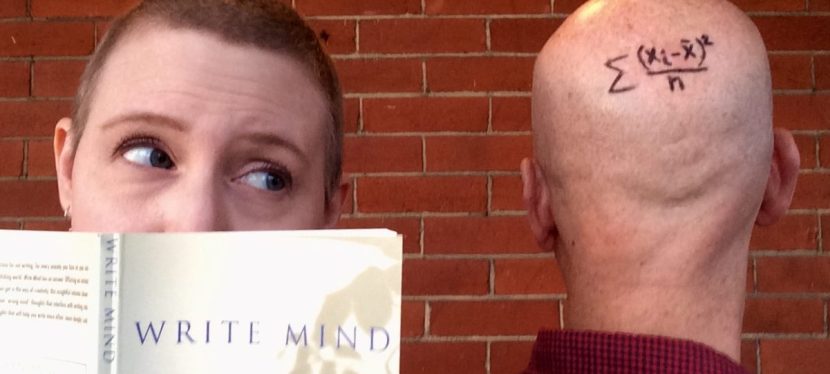
My husband is the math mind in the family; I’m the English nerd. But lately I’ve found myself thinking less about settings and symbolism, and more about symmetry and statistics.
Mirror, Mirror…
Many years ago, I did an experiment where I held a small mirror up to the center of my face while looking in a second larger mirror, so I could see how I’d appear if my face were perfectly symmetrical. All of us are at least a little asymmetrical, so the trick quickly reveals the differences, large or small, in the two sides of one’s face: the right eye has a little more tilt than the left, maybe, or one cheek is a bit fuller than its counterpart. The altered reflection, for me, almost felt like looking at different person, perhaps a sibling of myself.
The process of bilateral breast reconstruction has a tendency to highlight other asymmetries. The first thing my reconstructive surgeon said to me when he looked at my pre-surgery chest was that my left rib cage sat a little more forward, was a tiny bit more prominent, than my right. I’d never noticed this particular (minor) anomaly, but it’s apparently just as common for there to be asymmetry in the rib cage as in the face. The difference in my bone structure became most noticeable immediately after surgery and during my early tissue expander fills; for a while the right expander lagged behind the left, making me look lopsided. I also discovered I have a pocket of fat on my right upper back, unmatched on the left, which appeared only when I didn’t have breasts to pull the skin forward and keep it flattened out.
Even Olympic athletes’ bodies vary dramatically. (Photo by Schatz and Ornstein)
Studies indicate we equate higher levels of symmetry with perception of beauty, so it’s only too easy to worry over our various anatomical irregularities. But there’s so much about our bodies that’s out of our control: the set of our features; our bone structure; height; the size and shape of breasts, booty, genitals, hands and feet. We can exercise and lift weights to affect our body composition—but the ability to bulk up muscle mass, and the places our fat cells are predisposed to distribute themselves? That’s pre-determined. Significant elements of our health are hardwired too: some suffer multiple allergies from birth, for example, while others are born with immune systems seemingly hewn from impenetrable stone.
Bodies are glitchy and unpredictable in surprising ways, for better and for worse. The fact my body grew a malignant mass is somewhat mysterious: I am, as best we can tell, the first person in my blood family on either side to develop cancer of any kind. My body’s responsiveness to treatment is, to my mind, equally mysterious, and awe-inspiring: I learned this week that only 20 to 30 percent of triple negative breast cancer patients have, as I did, a “complete pathologic response” to chemotherapy. I was thrilled when we got the pathology report stating they’d found no evidence of remaining cancer during surgery, but the news felt weirdly abstracted. Learning the actual statistical probability of achieving that response was sobering. It made me realize just how incredibly fortunate I am. Having a complete response lessens the chance of recurrence dramatically, dropping it from 35+ percent down to 5 percent. As my oncologist said, it’s cancer, so there are no guarantees. But short of never having developed it in the first place, the odds for long-term survival are the best they can be.
I’ve often felt lucky to be in the body I am. Aside from some cranky tonsils, a couple bouts of pneumonia, and one broken bone, I’ve been hale and hearty most of my forty-seven years, and I’ve managed to stay active and maintain a healthy, if not altogether svelte, weight into my middle age without Herculean effort. Excepting the sixth grade, when my legs had a sudden growth spurt separate from the rest of my body that briefly turned me into a sort of hybrid stork-human, my parts are mostly proportional, and my face, while perhaps not symmetrical enough for Hollywood’s standards, is reasonably attractive.
I did nothing (unless you count that bane of puberty, wearing braces) to “earn” any of these features of anatomy. They just are, like my cancer, like my cancer’s responsiveness to treatment. Why did my body grow malignant cells in the first place? I don’t know. Why were those cells especially sensitive to death-by-chemotherapy? I don’t know the answer to that either. I do know I’m extremely lucky and profoundly grateful to be in the relatively small percentage of survivors who have that experience.
I’m just vain enough to feel relieved that the obvious asymmetries that appeared in my chest and back are slowly evening out as reconstruction progresses. But I’m far more reassured by a different realization. As I walked into the dining room Tuesday night, preparing to sit down to dinner with my hubby, it suddenly occurred to me: I no longer have cancer. Granted, my treatment isn’t quite done–follow-up radiation is the standard-of-care for triple negative diagnoses, even with a complete response to chemo, and reconstruction will take a while longer. But the chemotherapy worked; the surgery confirmed it. No more need I say, I have cancer. Now I can say, I had cancer.
My inner English nerd reappeared, rejoicing: the simple past tense has never sounded so beautiful.








 On October 31st, 2016, then-President Barack Obama made a Presidential Proclamation declaring November “National Family Caregivers Month,” honoring “those who give of themselves to be there for their family, friends, and neighbors in challenging times.” At the time, I missed the announcement, still in a pretty pronounced post-chemo fog of pain and fatigue. And I was especially distracted that week: on November 1st, I was scheduled for a post-chemo mammogram and ultrasound, followed by an appointment with my oncologic surgeon to review the results of the scans, which would tell us whether or not chemo had been effective. November 1st was also hubby Steve’s birthday. When we’d met with the oncologic surgeon pre-chemo to talk scans, the news had been tough, so we’d held off scheduling any birthday festivities for the evening, just in case.


 The process of bilateral breast reconstruction has a tendency to highlight other asymmetries. The first thing my reconstructive surgeon said to me when he looked at my pre-surgery chest was that my left rib cage sat a little more forward, was a tiny bit more prominent, than my right. I’d never noticed this particular (minor) anomaly, but it’s apparently just as common for there to be asymmetry in the rib cage as in the face. The difference in my bone structure became most noticeable immediately after surgery and during my early tissue expander fills; for a while the right expander lagged behind the left, making me look lopsided. I also discovered I have a pocket of fat on my right upper back, unmatched on the left, which appeared only when I didn’t have breasts to pull the skin forward and keep it flattened out.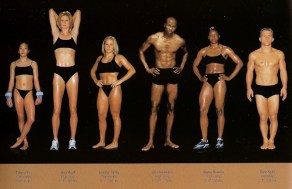
 I’ve often felt lucky to be in the body I am. Aside from some cranky tonsils, a couple bouts of pneumonia, and one broken bone, I’ve been hale and hearty most of my forty-seven years, and I’ve managed to stay active and maintain a healthy, if not altogether svelte, weight into my middle age without Herculean effort. Excepting the sixth grade, when my legs had a sudden growth spurt separate from the rest of my body that briefly turned me into a sort of hybrid stork-human, my parts are mostly proportional, and my face, while perhaps not symmetrical enough for Hollywood’s standards, is reasonably attractive.
 I’m just vain enough to feel relieved that the obvious asymmetries that appeared in my chest and back are slowly evening out as reconstruction progresses. But I’m far more reassured by a different realization. As I walked into the dining room Tuesday night, preparing to sit down to dinner with my hubby, it suddenly occurred to me: I no longer have cancer. Granted, my treatment isn’t quite done–follow-up radiation is the standard-of-care for triple negative diagnoses, even with a complete response to chemo, and reconstruction will take a while longer. But the chemotherapy worked; the surgery confirmed it. No more need I say, I have cancer. Now I can say, I had cancer.
 Still Life, Beyond Cancer