

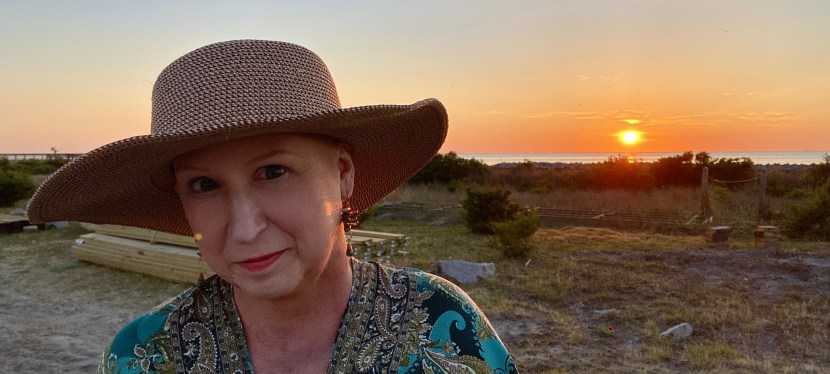
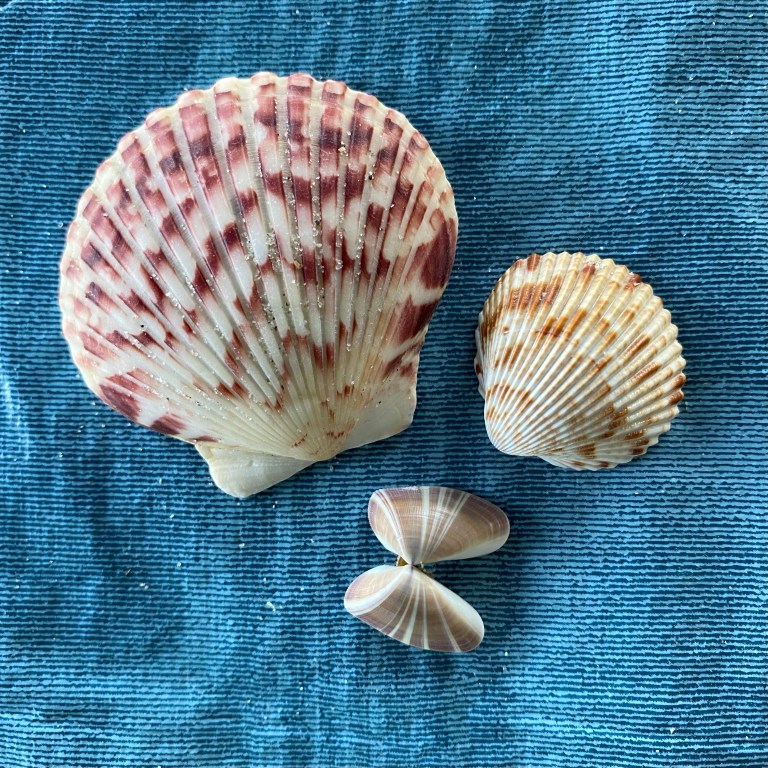
During our recent trip to the beach, I found myself more than once getting caught up in comparative thinking. We had a lovely visit to Ocracoke Island, where we stayed in a house we particularly like for its large screened porch that overlooks the marsh across the road. Granted, the first week was chilly, with one full day given over to rain. But we added layers and walked on the beach anyway, and by the start of our second week, the wind had largely calmed, the weather warmed. We spent a couple of days parked under our sunshade, reading and relaxing with toes in the sand. I found several kinds of seashells I’d not found before, and we explored the beach at the northern tip of the island, which was new to us. We took in three gorgeous sunsets over the sound, ordered takeout from some of our favorite restaurants, spent an afternoon visiting our favorite shops and galleries, and napped generously.
Sounds wonderful, yes? It was, taken on its own terms. But it was hard not to compare this trip to previous ones. I missed being able to walk for miles on the beach without it utterly exhausting me. I missed wearing some of my favorite beach clothes that no longer fit over my swollen arm, and having the strength and mobility to kayak in the sound. I missed being able to fully enjoy the island restaurants’ delicious food because of my swallowing issues. Some of the losses are the result of the pandemic–we used to enjoy getting dressed up and going out to dinner, but we felt like that was still too risky. And some of the activities we’ve participated in, like the annual Fireman’s Ball and local ghost tours, were cancelled or discontinued because of covid.

“Comparisons are odious”–the phrase, according to the Oxford English Dictionary, has been in use since the mid-15th century, and has appeared in works by Cervantes, Christopher Marlowe, and John Donne. “Comparison is the thief of joy,” ascribed to Theodore Roosevelt, is another aphorism that cautions us against making comparisons. Yet research by social psychologists Summerville and Roese found that “more than 10% of daily thoughts involved making a comparison of some kind.”
Though it’s hard not to think back wistfully on good times–and I think necessary and important to grieve those losses–dwelling on previous trips robs the most recent of some of its joy. I grow envious of my past, more innocent self, the self who trusted her body, who took her basic health for granted, who never could have imagined an entire globe held in thrall to a virus. Lately I’ve also found myself more and more envious of people who (appear to) have their health, posting photos of themselves on social media hiking, running, working out. Do they know what a gift it is? Those who are casual about covid make me wonder. Of course, regardless of how active and healthy someone may appear online or elsewhere, I can’t really know what’s going on in their life unless they confide in me directly and intimately.

Which is why comparisons are odious, even dangerous. I’ve written before about what I call “diagnosis envy,” something I have experienced more than once. You hear about someone else’s diagnosis, and think, If I had to have breast cancer, why couldn’t mine have been a stage-1 tumor that only required a lumpectomy? Or, why couldn’t I have been diagnosed with something with a lower incidence of recurrence? There are some objective measures that might make one diagnosis “better” than another. Some cancers, like breast cancer, have more research dollars behind them and near-constant innovations in treatment. I myself have benefited from that. Most patients would, I imagine, prefer to be diagnosed with a cancer that can be cured, rather than only treated and managed. Some types of cancer, statistically, are deadlier than others.
But a “better” diagnosis doesn’t necessarily equate to an easier journey. The type and stage of cancer and the treatment options are only two factors that affect a patient’s experience. Someone without insurance or sufficient financial means to pay for treatment will endure additional stress, perhaps even bankruptcy. Many people have a limited or non-existent support network. Even proximity to treatment centers makes a difference–we only have to drive five minutes each way, whereas many patients commute two hours or more for each appointment. Knowing someone’s diagnosis doesn’t give me a full picture of what they are going through, so diagnosis envy is unhelpful.
I was taken aback recently upon reading a social media post made by the parent of a teen survivor of brain cancer. Though the overall intent was good–to raise awareness about how life-saving interventions like radiation can have their own devastating consequences–one statement stopped me cold: “We’re talking about the brain here, folks…it’s not a bone or fat tissue.” The writer goes on to say that other cancers “can be” “devastating,” but the initial comparison is, well, odious. I know someone who lost her teenage son to bone cancer. And while I’m not certain as to whether “fat tissue” was meant to include breasts (breast cancer grows in ducts or lobes, not “fat”), I’ve witnessed too many women struggle with this disease to be comfortable hearing its challenges dismissed. I haven’t had brain cancer, or received treatment for it, so I won’t argue that it isn’t worse than what I’ve gone through–I don’t know. Nor do I know what it is like to endure cancer as a child. I can say this: neither suffering, nor dreams for the future, know an age.
No one wants to play in the suffering olympics, and god knows, no one wants to win. Comparisons are helpful only if they lead to greater compassion and empathy. I’m happier when I’m able to focus on the beauty that is now, and I believe it is always better to assume others need my kindness. After all, as Ram Dass says, we’re all just walking each other home.

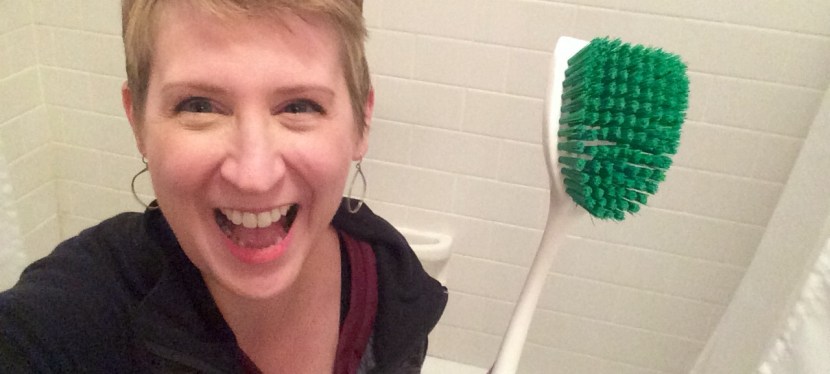
 Having the energy to get back to tackling those boxes and cleaning the house is a profound comfort and surprising thrill. Before this past year, I’d never thought it would feel like such a massive accomplishment to be able to scrub my bathtub. Before this past year, I’d never thought about how much physical effort actually goes into scrubbing a bathtub: getting down to and up from the floor, kneeling for an extended period, bending and reaching and applying pressure. You don’t realize how many ways you use your pec muscles in everyday living until they’ve been scraped and radiated and permanently stretched over silicone implants. While I would much rather breathe in the aromas of fresh French pastries or a salty sea-breeze than Mrs. Meyer’s Lavender Counter Spray, I now understand just what a gift it is to have sufficient strength and mobility to wield a scrub-brush and push a mop.



 On the Solstice, ten days after my diagnosis, I prepared and carried out a Solstice ritual. I find value in rituals, especially in times of transition. Based in large part on an article by Monica Carless in Elephant Journal, my ritual was in essence my plea to the universe that the news at the next day’s appointment be good: that the tumor be small, the cancer caught early, the stage 1 or 2. I dressed in white, and we lit a fire in the firepit in the backyard. I lit three candles, one each to represent the past, present, and future. I spoke some text, mostly borrowed from Carless, a portion of which went like this:


 The Spring Equinox, March 20th, marked nine months since that summer ceremony of hope, the last evening we were free to imagine a different reality than the one we were presented with the next day. Nine months—a gestation period. It seemed important to mark the Equinox, sometimes called the “day of equilibrium,” with a ceremony as well, as a way of bringing things full circle and signaling my moving forward.
 I burned the “Bye-Bye Cancer” signs from my


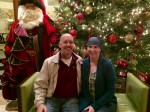 I am more aware than ever of the many gifts in my life. Plentiful food; a warm, safe, spacious home. The love and care of so many people: devoted family who share their time and energy generously, decorating the tree, making meals, running errands, offering a voice of experience. Beloved friends who text encouraging messages, share their skills and favorite books, send beautiful holiday cards and bouquets that brighten up the darker days. And an incredible husband who stands by my side, makes me laugh, and doesn’t blink at changing bandages or fetching yet another Coca-Cola Icee (or even question my weird craving for them).
 I’m also aware of gifts I’ve received for so many years without any comprehension they were gifts: the mobility to towel myself dry after a shower, mindlessly, unaware of the many twists and turns my body had to make to accomplish this simple task; the steadiness to reach the sugar where it lives on the highest kitchen shelf without having to ask for help; the stamina to sit at my computer and write for hours at a stretch. The gift of the absence of pain or discomfort. The gift of good health. Gifts I hope to receive again, and fully appreciate hereafter.
 We won’t receive the full pathology report from the surgery until early January: we are hoping, based on the post-chemo scans, for good news. Until then, we will continue to celebrate the gift–a precious one– of another Christmas together. And I’ll keep you posted as often as I’m able about my ongoing Adventures in Cancerland.
 Still Life, Beyond Cancer